01 · Overview
เกี่ยวกับ Hakkoda Ropeway
Hakkoda Ropeway เป็นลานสกีใน Aomori
★ Editorial Guide
💛 Why travelers love (or skip) this resort
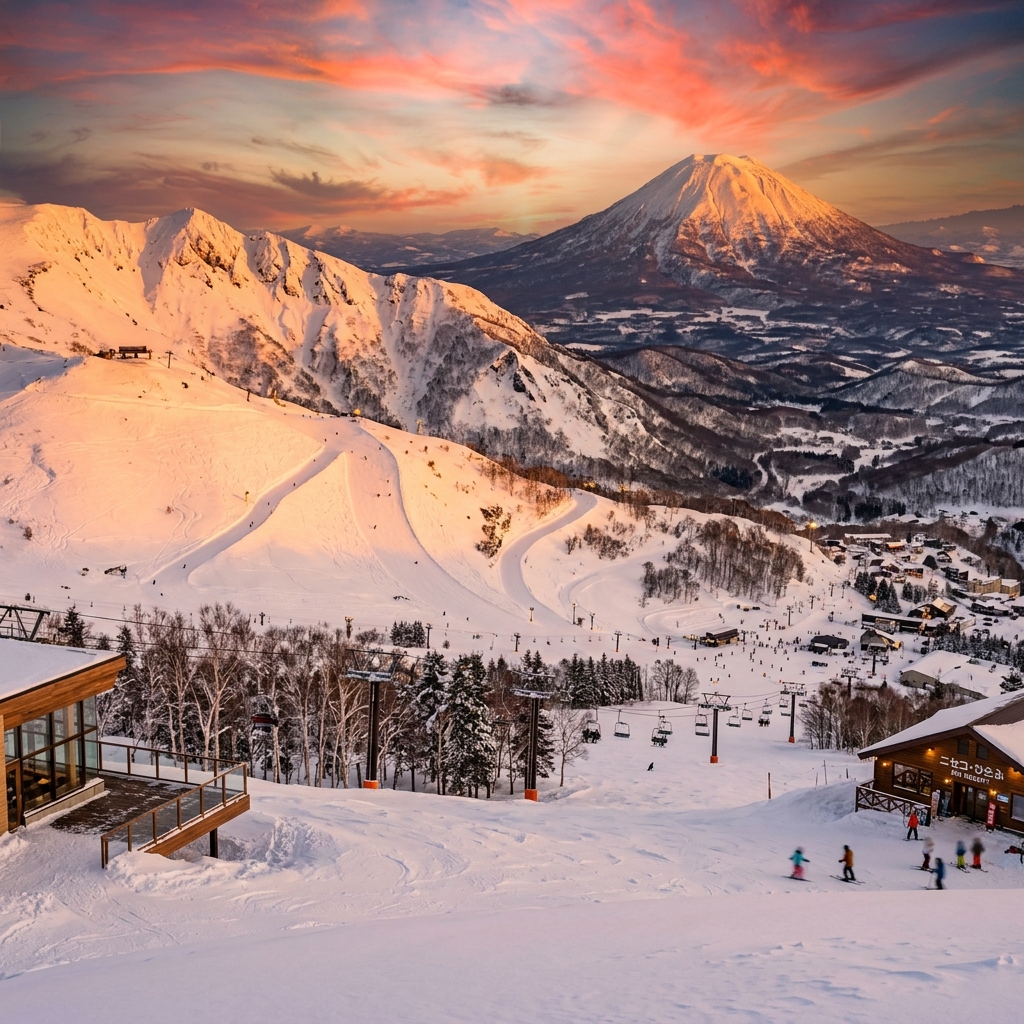
If you can already ski powder and you want the real wild thing without flying to Hokkaido, Hakkoda is the trip. No question. You ride the ropeway up into a forest of frost-caked trees, the juhyo (snow monsters), and drop into Powder Snow so deep and light it feels like floating. That is a regular morning here. This is a set of volcanic peaks above Aomori City with one ropeway, two short chairlifts, and a whole lot of mountain that nobody grooms, and that wildness is exactly the point. People come for two things: those snow monsters, the same frost-rimed trees Zao is famous for, and that bottomless Tohoku powder. You will fall hard for this place if you ski well and you want raw beech-forest mountain with a 1,000-person onsen just down the road. If gentle and groomed is more your speed right now, that is good to know going in, because Hakkoda rewards skiers who arrive ready for it. Come prepared and it gives you a day you will be talking about for years.
📊 Honest scorecard, friend to friend (1 to 10)
🎿 The terrain, honestly
Hakkoda has five named courses: three groomed, two ungroomed, with runs as long as 7km off the ropeway. The two chairlifts (Furikozawa and Kansuizawa) serve the lower groomed slopes and are a lovely warm-up for confident intermediates. The real Hakkoda starts at the top of the ropeway on Tamoyachidake, where there are no groomers, no piste markers in a storm, and avalanche terrain in every direction. Treat that top as the big-league playground it is and you will have the time of your life.
The famous "Forest Course" and "Direct Course" wind down through the snow monsters. On a clear day they are a satisfying challenge. On a storm day, which is most days, they ask you to read terrain, manage flat light, and stay calm when visibility drops. The official resort site notes that temperatures hit -10C even in April and that you should never ski alone here. Take that to heart, because it is what keeps the day fun.
If you want to ride the bowls and trees beyond the marked area, go with a guide and you are in for one of the best days of your life. The Hakkoda Guide Club and operators like Mint Tours run lift-accessed backcountry tours from roughly mid-January to late March across Tamoyachidake, Akakuradake, Odake, and the surrounding peaks. This is touring with skins and avalanche gear, not the lift-served cat skiing of the Niseko sense. Budget for a guide, a transceiver, and a partner, and the whole mountain opens up to you.
🍽️ 5 things to eat (real names + prices)
🏨 Where to stay (picks across price ranges)
🚄 Getting there from Asian cities (no rental car)
Good news: you can do this whole trip on public transport. The bus schedule is the one thing to plan around, and once you do, it is smooth.
There are luggage lockers near the Shin-Aomori east-exit bus stop, so you do not have to haul boards onto the bus. A nice little convenience.
💡 ทิปจากคนใน
- Buy the round-trip ropeway ticket (Y2,200 adult, about 490 THB) if you only want to ski the top a couple of times, or the chairlift day pass (Y5,000 adult, about 1,100 THB) if you are lapping the lower groomed runs.
- Carry cash. Rural Tohoku is cash-first, which is part of its charm. The reliable ATMs that take foreign cards are at 7-Eleven and Japan Post in Aomori City. Pull out Y20,000 to Y30,000 before you leave the city and you will breeze through the day.
- Storm days are the magic here, and high wind can close the ropeway with little notice. So check the Hakkoda Ropeway status first thing in the morning and keep a happy backup plan ready (Sukayu Onsen, Aomori museums).
- Rent gear at the base for about Y5,000 a day for a full ski package (about 1,100 THB), open 08:30 to 16:00. Powder-specific gear is limited, so serious riders will want to bring their own.
- Hire a guide for anything beyond the marked runs. At Y10,000-plus per day, it is the best value insurance there is, and your guide knows exactly where the best snow is hiding.
⚠️ ข้อควรระวัง
- Treating it like Niseko. People see "ski resort Japan" and expect an English ski school and a beginner carpet. Hakkoda is a different animal, so come knowing that, and if a non-skiing partner is joining, plan a Sukayu onsen day for them instead of lessons.
- Missing the last bus. The 15:03-ish return is the single thing to watch, so set an alarm and you are golden.
- Skiing the powder alone. Tree wells and deep snow are real here, so ski in pairs, always. It is more fun with a buddy anyway.
- Coming on a whiteout day as a low intermediate and dropping into the top "green" run because the map looked easy. The top is more serious than the map suggests, so save it for a clear day or a guided session and enjoy it fully.
- Expecting halal or vegetarian food on the hill. There is none up there, so pack it and you will eat well all day.
★ ก่อนไปต้องรู้
- This is a serious mountain. Avalanche terrain, whiteouts, deep snow, and no grooming up top. Go with a guide or an experienced friend, ski within your level, and you are in for one of the best powder days of your life.
- The winter bus schedule is tight: only about 3 services a day and a mid-afternoon last bus. Without a car you are working around a timetable, so screenshot it the night before and you will glide through the day.
- Asian-language support is still thin and there is no halal or vegetarian food on the mountain. Thai, Korean, and Mandarin speakers will navigate just fine with a translation app and a bag of packed snacks. Sort that out at the city convenience store and you are all set.
📷 Photo Spot
📅 สภาพหิมะในแต่ละเดือน
⚖️ Compare to alternatives
02 · Live Conditions
Snow · Forecast · Lifts
❄️ Snow Report
Aug 7, 2026Weather data temporarily unavailable. Please try again later.
📅 7-Day Forecast
Forecast temporarily unavailable. Please try again later.
🚡 Area & Lift Status
Status not yet set
03 · Trails
Trails · Powder + Cruisers
📋 Runs breakdown not yet filled
04 · Where to Stay
Where to Stay
📋 No hotels yet
05 · Lift Tickets
Lift Tickets · Lessons · Thai Instructors
📋 Lift ticket prices not yet set
👨🏫 Ski Instructors (Thai/English)
📋 No ski instructors listed yet — please contact the resort directly
06 · Getting There
Tokyo → Hakkoda Ropeway
JR East Pass
Tohoku Shinkansen · Reserved seats
- ⏱ ~2 hr 35 min
- 📅 5 consecutive days
- ♻ Reserved seat included
Highway Bus
Shinjuku → Local · Express
- ⏱ ~6 hr 30 min
- 🌙 Overnight option
- 📶 Wi-Fi + reclining seats
Nearest airport
No airport data yet
07 · Gear & Insurance
Gear Rental · Travel Insurance
⛷ Ski Gear Rental
Gear rental prices not yet set
🛡 Ski Travel Insurance
Covers ski accidents · medical · lost luggage · flight delays
- Coverage฿2-5M
- Medical evacuation✓
- Ski/snowboard cover✓
- Heli-rescue / off-pistePro plan
08 · Local Tips
Local Tips from Insiders
📋 No local tips yet
09 · FAQ
Frequently Asked Questions
📋 No FAQ yet
10 · Reviews
Travelers say about Hakkoda Ropeway
⭐ Reviews
Share your experience at Hakkoda Ropeway — no account needed.
💬 No reviews yet. Be the first to share your experience!
📍 Nearby Places
Discover ski rentals, restaurants, onsens, and stations around the resort
Request failed with status code 429