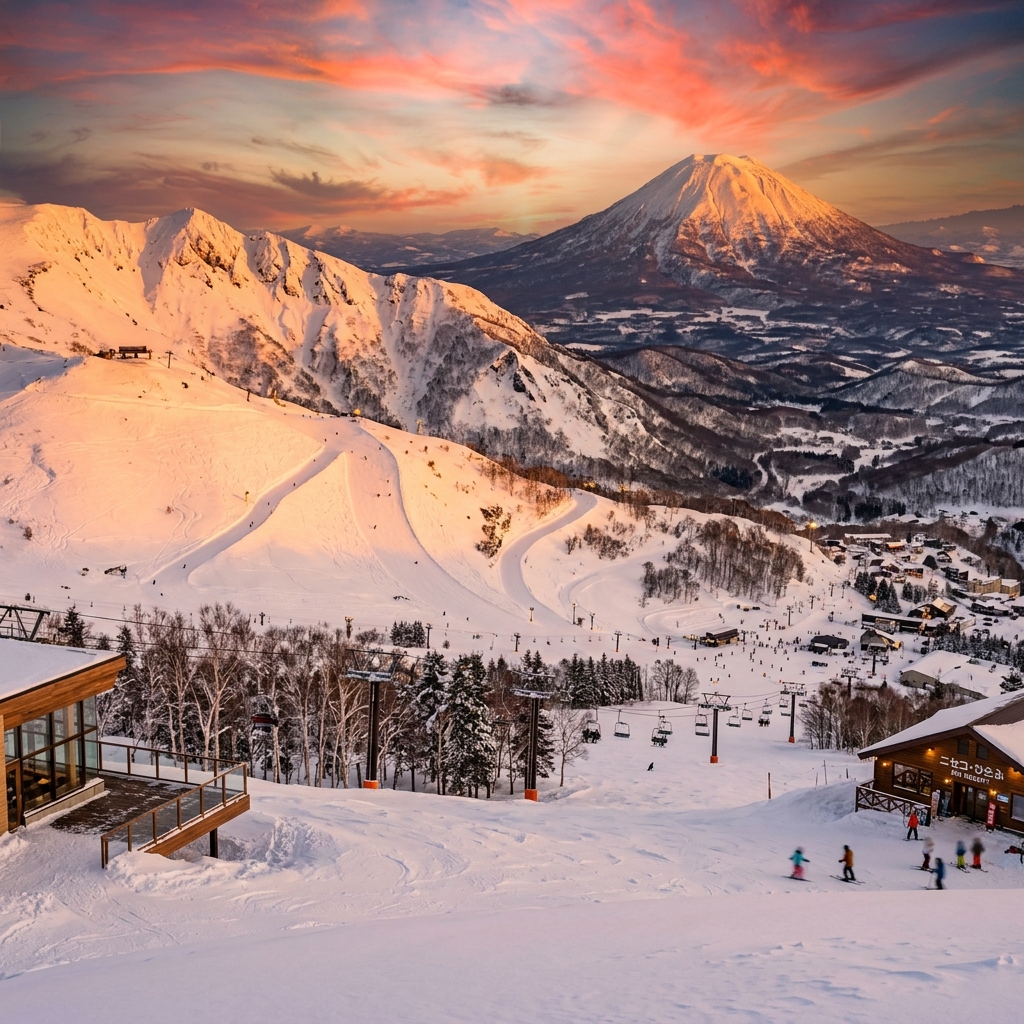
01 · Overview
เกี่ยวกับ Nozawa Onsen
Nozawa Onsen Ski Area เป็นลานสกีใน Nagano
🗺 · Trail Map
Nozawa Onsen Trail Map
Colour-coded trails + lifts + gondolas mapped via GPS · Zoom in and click to see trail names
★ Editorial Guide
💛 Why travelers love (or skip) this resort
A grandmother in a yukata shuffles down a snowy cobblestone lane at 6am, towel folded over her arm, heading for the same wooden bathhouse she has soaked in for forty winters. Inside that 100-year-old soto-yu, which costs nothing to enter and sits 90 seconds from most front doors, she nods at the same regulars while steam fogs the rafters. Up the slope, her grandkids are still asleep in the ryokan, saving their legs for one big mountain that feels like it was made for an easy, happy day. That is Nozawa, and it is the answer for anyone who wants the onsen-village dream without the resort feeling like an airport. Compare it to Niseko, where most of the village is new condos and the lift-line chatter is more English and Cantonese than Japanese. A Taiwanese instructor guide (SSW Board House) puts the local read nicely: the food is consistently good and the beginner runs like Uenotaira (上ノ平) are "very spacious, not crowded." Here is the honest, friendly flip side so you can plan well: Nozawa is one connected mountain with limited steep terrain, so if you are a strong skier who loves variety, you will get the best of both worlds by pairing it with Hakuba. Either way, you are going to love your time here.
📊 Honest scorecard, friend to friend (1 to 10)
🎿 The terrain, honestly
Nozawa is 297 hectares, 46 runs, and a 1,085m vertical drop from the Yamabiko area down to the Hikage and Nagasaka bases. It is one of Japan's larger single mountains, and the layout is genuinely lovely for beginners and intermediates. The top of the mountain (Uenotaira / 上ノ平 plateau and the Paradise run) is wide, mellow, and long, so first-timers get real distance under their skis instead of a 50-meter carpet. The Skyline course is the postcard run: a ridge-top traverse with views over the valley on a clear morning that you will remember long after the trip.
Intermediates are spoiled here. The Karasawa run (number 35) is a fast, spacious cruiser. The Schneider area on skier's right hands you steeper pitches whenever you want them. Advanced skiers get the Yamabiko trees and the steepest mogul faces, and a friendly reminder to keep expectations right: this is not Hakuba's Happo-One for sustained steep terrain, so it shines best as part of a wider trip. Tree skiing exists, and one caring tip to keep your day smooth: Nozawa is stricter than some resorts about staying in bounds, so stick to the marked tree zones and do not duck ropes. The ski patrol and the local community take this seriously, and respecting it keeps the mountain open and friendly for everyone.
🍽️ 5 things to eat (real names + prices)
🏨 Where to stay, picks across price ranges
🚄 Getting there from Asian cities (no rental car)
Most Asian visitors fly into Tokyo (Narita or Haneda), not Nagano. Nozawa has no shinkansen station of its own, so the standard route is wonderfully simple: Tokyo Station to Iiyama on the Hokuriku Shinkansen (about 100 to 120 minutes, roughly Y8,500, one train per hour), then the Nozawa Onsen Liner bus from Iiyama (25 minutes, Y600, every 1 to 2 hours, cannot be pre-booked). Total around Y10,000 (about 2,300 THB / 95 SGD) and 3 to 4 hours door to door. Easy to manage.
There are also direct seasonal buses from Tokyo and Narita straight to the village (around 6 hours), cheaper but slow, a nice option for budget travelers and overnight arrivals.
💡 ทิปจากคนใน
- Take the free village shuttle. The town is built on a hill, and walking uphill in ski boots is the one rookie move to skip; the shuttle loops between the village and the lift bases and saves your legs.
- Bathe by bathhouse temperature, not by name. Some soto-yu (like Ogama's neighbors) run scaldingly hot, so watch which locals get in, and add cold water sparingly only if there is a tap, never tip out the spring water.
- Drop a coin in the donation box at each free bath. The baths are maintained by the villagers' yu-nakama system, not the government, and those coins are what keep this magic alive.
- Buy multi-day lift passes online in advance. The 2-day adult pass ran about USD89 for the 2025-26 season, and pre-purchasing means you skip the morning ticket queue and get on the snow sooner.
- Book your ryokan early. Almost all lodging sits inside one village, so the good places sell out months ahead for the Fire Festival window and Lunar New Year. Plan ahead and you land the gem.
- If you visit for the Dosojin Fire Festival (January 15), arrive a day early and reserve lodging by autumn. It is one of Japan's three great fire festivals and the village fills completely, so it is worth the early planning.
- Carry cash. Many small ryokan, bathhouses (donations), and family izakaya are cash-first, so a little yen in your pocket keeps everything easy.
- Kids under 6 (5 and under) ski free with a paying adult, and full-day kids lessons include lunch supervision. Book the group lessons early since they need a minimum of 3 kids, and your little ones are set for a great day.
⚠️ ข้อควรระวัง
- Assuming everywhere takes cards. The 13 baths take donation coins, and small eateries are often cash-only, so here is the easy fix: withdraw yen at a 7-Eleven (Seven Bank) ATM, which reliably accepts foreign cards, before you leave Tokyo or at Iiyama, since village ATMs are limited. Sorted in two minutes.
- Skipping the onsen because of tattoos. The public soto-yu are mixed-local baths with no formal tattoo check at most, but they are small and communal, so just be discreet. If you have visible tattoos and want total certainty, book a ryokan with a private bath (kashikiri) like Kawakikan or Kawamotoya and soak completely at ease.
- Going in without washing first. You scrub and rinse fully at the wash station before entering the shared tub. This is the one piece of etiquette to nail, locals will notice, and getting it right makes you feel right at home.
- Booking the wrong pass. Nozawa is its own single pass and it is not on the Hakuba Valley lift ticket, so if your plan pairs both, simply buy two separate passes and you are good.
- Expecting a station in the village. There is no shinkansen stop at Nozawa, so you hop off at Iiyama and take the bus. Travelers who book a taxi from Nagano city instead pay far more, so stick with the bus and save your money for ryokan dinners.
- Treating it like Niseko nightlife. Nozawa is quiet and cozy after dinner. If party apres is what you are after, this is the wrong village, but if a calm soak and a craft beer sound perfect, you are in exactly the right place.
★ ก่อนไปต้องรู้
- One mountain, limited steeps. Strong skiers will work through the challenging terrain quickly, so if advanced skiing is your priority, Nozawa shines best as a two-day add-on to Hakuba rather than a week-long base. Plan it that way and you get the best of both.
- Thin non-English language support and a still-growing halal scene. There is no native Thai or Korean ski school yet, signage outside the resort is inconsistent, and there is no dedicated halal restaurant in the village, so Muslim families will want to self-cater or pre-arrange meals. A little planning here and everyone eats well.
- Awkward last-mile access and a hilly village. No shinkansen stop means a bus transfer at Iiyama, and the town is built on a slope, so hauling gear and luggage on icy lanes with kids and grandparents is real work. The easy move is to stay near the Hikage base to keep it light, and the rest of the trip feels effortless.
📷 Photo Spot
📅 สภาพหิมะในแต่ละเดือน
⚖️ Compare to alternatives
02 · Live Conditions
Snow · Forecast · Lifts
❄️ Snow Report
Aug 7, 2026Weather data temporarily unavailable. Please try again later.
📅 7-Day Forecast
Forecast temporarily unavailable. Please try again later.
🚡 Area & Lift Status
Status not yet set
03 · Trails
Trails · Powder + Cruisers
📋 Runs breakdown not yet filled
04 · Where to Stay
Where to Stay
📋 No hotels yet
05 · Lift Tickets
Lift Tickets · Lessons · Thai Instructors
📋 Lift ticket prices not yet set
🎫 Buy in advance via Klook
Skip the line · QR code · 30-day cookie
💡 Estimated from Resort.pricing · partners often have extra promos · final price at partner site
👨🏫 Ski Instructors (Thai/English)
📋 No ski instructors listed yet — please contact the resort directly
06 · Getting There
Tokyo → Nozawa Onsen
JR East Pass
Tohoku Shinkansen · Reserved seats
- ⏱ ~2 hr 35 min
- 📅 5 consecutive days
- ♻ Reserved seat included
Highway Bus
Shinjuku → Local · Express
- ⏱ ~6 hr 30 min
- 🌙 Overnight option
- 📶 Wi-Fi + reclining seats
Nearest airport
No airport data yet
07 · Gear & Insurance
Gear Rental · Travel Insurance
⛷ Ski Gear Rental
Gear rental prices not yet set
🛡 Ski Travel Insurance
Covers ski accidents · medical · lost luggage · flight delays
- Coverage฿2-5M
- Medical evacuation✓
- Ski/snowboard cover✓
- Heli-rescue / off-pistePro plan
08 · Local Tips
Local Tips from Insiders
📋 No local tips yet
09 · FAQ
Frequently Asked Questions
📋 No FAQ yet
10 · Reviews
Travelers say about Nozawa Onsen
⭐ Reviews
Share your experience at Nozawa Onsen — no account needed.
💬 No reviews yet. Be the first to share your experience!
📍 Nearby Places
Discover ski rentals, restaurants, onsens, and stations around the resort
Request failed with status code 429